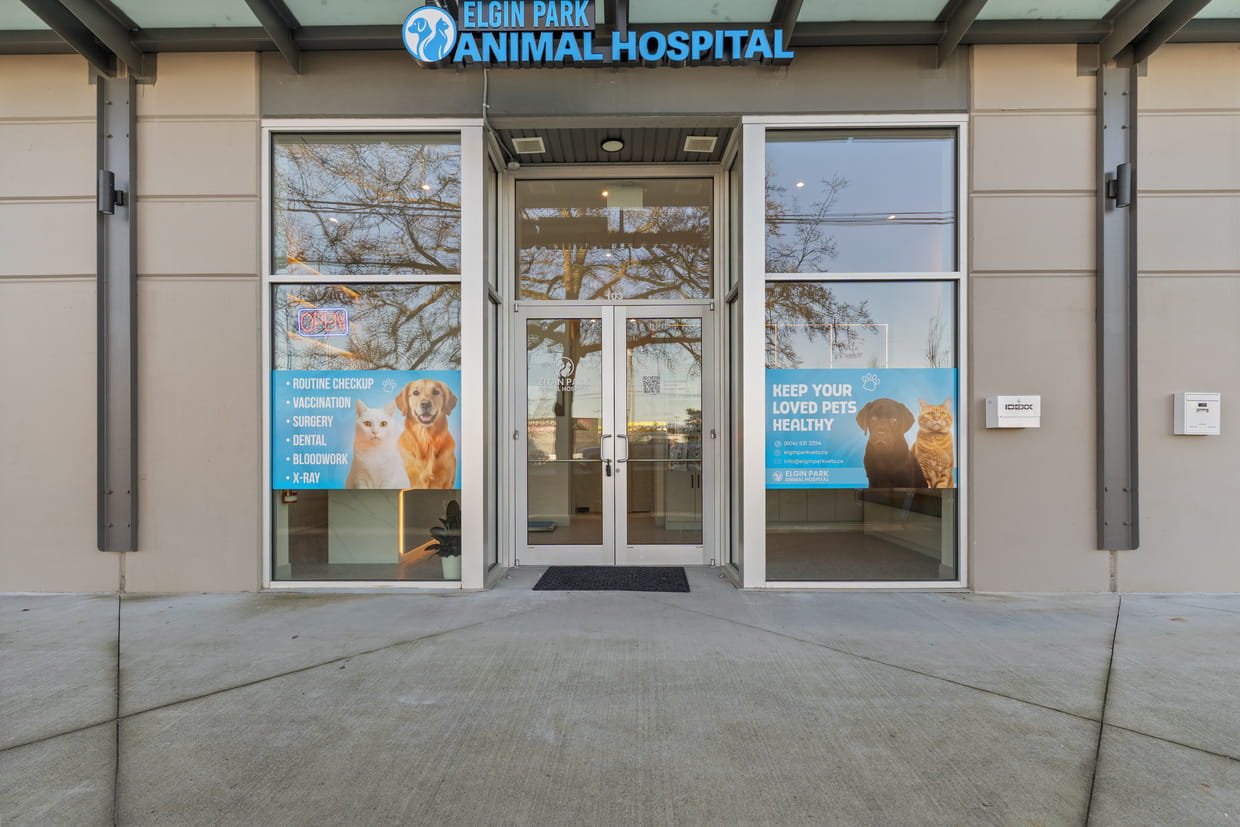
Bringing a puppy home is one of the most exciting things a family can do. The first twelve months are packed with vaccinations, new experiences, socialization milestones, and a few surprises along the way. This guide is here to help you navigate that first year with confidence. At Elgin Park Animal Hospital in South Surrey, we are here to support you and your puppy at every step, from their very first visit to their one-year wellness check.
Bringing Your Puppy Home
The first few days in a new home can feel overwhelming for a young puppy. Keeping things calm and predictable helps your puppy settle in faster and builds trust from the start.
Before Your Puppy Arrives
- Designate a quiet space with a bed, water, and a few safe toys.
- Puppy-proof the home: secure electrical cords, remove toxic plants, and block access to stairs.
- Purchase food appropriate for your puppy’s breed size (small, medium, large, or giant breed formula).
- Set up a crate if you plan to crate train. Make it comfortable with a soft blanket and a worn item of your clothing.
- Book your first vet appointment within the first 3 to 5 days of bringing your puppy home.
The First Night
Many puppies cry on their first night away from their litter. A warm (not hot) water bottle wrapped in a towel and placed near the bed can help. Keeping the crate in your bedroom for the first few nights reduces anxiety without creating long-term habits you will need to change.
Puppy-Proofing Checklist
- Lock away cleaning products, medications, and chemicals.
- Remove or fence off toxic plants (see Household Hazards section below).
- Secure garbage cans with a locking lid.
- Store shoes, socks, and small objects out of reach.
- Block access to pools, hot tubs, and unfenced outdoor areas.
At-a-Glance Vaccine Schedule
Core vaccines protect your puppy from the most serious and contagious diseases. The schedule below is a general guide. Your veterinarian at Elgin Park Animal Hospital will tailor it to your puppy’s age, health history, and lifestyle.
Age | Core Vaccines | Optional / Lifestyle Vaccines |
6 to 8 weeks | DHPP (Distemper, Hepatitis, Parvovirus, Parainfluenza) | Bordetella (kennel cough) |
10 to 12 weeks | DHPP booster | Bordetella, Leptospirosis (recommended in South Surrey) |
14 to 16 weeks | DHPP booster + Rabies | Leptospirosis booster, Canine Influenza |
12 to 16 months | DHPP booster + Rabies booster | Leptospirosis annual, Bordetella annual |
Every 1 to 3 years (adult) | DHPP (triennial), Rabies | Based on lifestyle and risk assessment |
Important: If your puppy received any vaccines at the breeder or shelter, bring those records to your first appointment. Your veterinarian will review what has already been given and schedule only what is still needed.
Important Note on Lifestyle Vaccines
Not every puppy needs every optional vaccine. Your veterinarian will ask about your puppy’s lifestyle: do they visit dog parks, attend doggy daycare, or hike in wooded areas near water? In South Surrey and White Rock, Leptospirosis is a meaningful risk given the proximity to ditches, wetlands, and off-leash areas. If your dog spends time outdoors near wildlife or standing water, Leptospirosis vaccination is strongly recommended.
Spay and Neuter
Spaying and neutering reduces the risk of certain cancers and infections and helps manage the pet overpopulation problem in BC. Timing matters, and it varies by breed size.
Breed Size | Recommended Timing | Notes |
Small breeds (under 10 kg) | Around 6 months | Can be done earlier if medically appropriate |
Medium breeds (10 to 25 kg) | Around 6 months | Some vets recommend waiting until 9 months |
Large breeds (25 to 45 kg) | 9 to 12 months | Hormones support musculoskeletal development |
Giant breeds (over 45 kg) | 12 to 18 months | Earlier spay/neuter may increase joint disorder risk |
Our surgical team at Elgin Park Animal Hospital performs spay and neuter procedures with full anesthesia monitoring and post-operative pain management. Please visit our
Surgical Services page [/services/surgical-services/] for more information.
Nutrition for Your Puppy’s First Year
Puppies grow rapidly in their first year and have nutritional needs that are very different from adult dogs. Choosing the right food at the right life stage supports bone development, brain health, and a strong immune system.
What to Feed
- Choose a food labelled ‘complete and balanced for growth’ or ‘all life stages’ from an established brand that follows AAFCO or WSAVA guidelines.
- Large and giant breed puppies need food specifically formulated for large breeds. These foods have controlled calcium and phosphorus levels that support healthy joint development.
- Avoid foods with generic ‘meat meal’ as the primary protein source. Look for a named protein (chicken, salmon, lamb) as the first ingredient.
How Much and How Often
- 8 to 12 weeks: 4 meals per day
- 3 to 6 months: 3 meals per day
- 6 months to 1 year: 2 meals per day
- Follow the feeding guide on the packaging as a starting point and adjust based on body condition.
What to Avoid
- Grapes, raisins, onions, garlic, xylitol (in many sugar-free products), macadamia nuts, and chocolate are toxic to dogs.
- Avoid free-feeding (leaving food out all day), as it makes portion control and house training harder.
- Do not feed table scraps or rich human foods, especially in the first few months.
For personalized dietary guidance, our Nutrition Counseling team can help you build a feeding plan suited to your puppy’s breed, size, and activity level. Visit our
Nutrition Counseling page [/services/nutrition-counseling/] to learn more.
Parasites: What to Know
Deworming
Most puppies are born with intestinal parasites passed from their mother. A standard deworming protocol begins at 2 to 3 weeks of age and is repeated every 2 weeks until 12 weeks, then monthly until 6 months. After that, your veterinarian will recommend a maintenance schedule based on your dog’s lifestyle and fecal test results.
Fleas and Ticks
In the Lower Mainland, fleas are a year-round concern. Ticks are increasingly common in South Surrey and the surrounding area, particularly in grassy and wooded spaces like Elgin Heritage Park and Crescent Beach Regional Park. Year-round parasite prevention is recommended.
- Ask your veterinarian about monthly topical or oral flea and tick prevention products.
- Check your dog for ticks after any outdoor activity in tall grass or wooded areas.
- If you find a tick, use fine-tipped tweezers to remove it by grasping as close to the skin as possible and pulling upward steadily. Do not twist.
Heartworm
Heartworm is less common in coastal BC than in other regions but is present and can be transmitted by mosquitoes. If your dog travels to other provinces or warmer climates, prevention is essential. Your veterinarian can recommend appropriate preventives based on your dog’s risk level.
Giardia
Giardia is a waterborne intestinal parasite common in BC. Puppies who drink from puddles, streams, or shared water bowls are at risk. Symptoms include loose stools, diarrhea, and weight loss. Diagnosis is by fecal test and treatment is straightforward. Avoid letting puppies drink from standing water sources.
Family Safety
Some intestinal parasites, particularly roundworms and hookworms, can be transmitted to people, especially children. Regular deworming, prompt stool cleanup, and good hand hygiene after handling your puppy or cleaning up after them significantly reduce any risk.
House Training
Consistent house training in the first weeks sets the foundation for a lifetime of good habits. Most puppies can be reliably house trained by 4 to 6 months with consistent routine.
The Basics
- Take your puppy outside immediately after waking up, after meals, after play sessions, and before bed.
- Use the same outdoor spot each time. The familiar scent helps trigger elimination.
- Praise and reward immediately after your puppy goes outside. Timing is everything, the reward must come within 2 to 3 seconds of the behavior.
- Supervise your puppy indoors at all times. If you cannot watch them directly, use a crate or exercise pen.
Accidents
Accidents will happen. Clean them thoroughly with an enzymatic cleaner to remove odor completely. Punishing a puppy after the fact does not work and damages trust. If you catch your puppy mid-accident, interrupt calmly and take them outside immediately.
Crate Training
A crate is not a punishment. It is a safe space that also uses your puppy’s natural instinct to avoid soiling their sleeping area. The crate should be just large enough for your puppy to stand, turn around, and lie down. A crate that is too large allows them to use one end as a bathroom.
Socialization and Gentling
The socialization window closes at approximately 12 to 16 weeks of age. What your puppy experiences during this period shapes their behavior and confidence for the rest of their life. Positive, low-stress exposure to a wide variety of people, animals, sounds, surfaces, and environments during this time is one of the most valuable investments you can make.
What to Expose Your Puppy To
- Different people: men, women, children, people wearing hats, uniforms, or glasses
- Other vaccinated, friendly dogs and cats
- Common sounds: traffic, vacuum cleaners, thunder, door bells, crowds
- Surfaces: grass, gravel, tile, hardwood, metal grates, stairs
- Being handled: paws touched, ears examined, mouth opened, body held
Cooperative Care and Gentling
Cooperative care means teaching your puppy to actively participate in and accept handling rather than simply tolerating it. Start touching your puppy’s ears, paws, and mouth gently from day one. Pair handling with treats and keep sessions short. This makes future vet visits, grooming appointments, and medical care far less stressful for your dog and for you.
Puppy Classes
A well-run puppy class is one of the best investments you can make. Look for classes that use reward-based methods and allow supervised off-leash play. Classes held before 16 weeks provide the most benefit for socialization.
Children and Other Pets
Children
Teach children to approach the puppy calmly and to always let the puppy sniff their hand first. Children should not disturb a puppy while it is eating or sleeping. Supervised interactions only until the puppy is well settled and both the child and the puppy understand boundaries. Even the most gentle puppy can nip when startled or overstimulated.
Other Dogs
Introduce dogs on neutral ground if possible. Keep both dogs on a leash initially and allow brief, positive greetings. Avoid forcing interaction. Feed dogs separately for the first few weeks to prevent resource guarding.
Cats
Keep the puppy on a leash during initial cat introductions. Allow the cat to approach on their own terms. Provide the cat with high spaces they can retreat to. Many dogs and cats coexist happily once introductions are handled slowly and positively.
Foreign-Body Ingestion Hazards
Puppies explore the world with their mouths. Foreign body ingestion is one of the most common reasons young dogs end up in urgent care. Objects that are particularly dangerous include:
- Socks, underwear, and hair ties (can cause complete intestinal blockage)
- Corn cobs (do not break down and are a common surgical emergency)
- Bones: cooked bones splinter and can perforate the digestive tract
- Toys or toy pieces smaller than the puppy’s head
- String, ribbon, tinsel, and dental floss (linear foreign bodies are especially dangerous)
- Batteries, coins, and small magnets
- Children’s toys with small parts
If your puppy swallows something concerning, call us immediately at (604) 531-3394. Do not wait to see if symptoms develop. Prompt assessment leads to much safer outcomes.
Holiday and Household Hazards
Toxic Foods
- Chocolate (all types, darker is more toxic)
- Grapes and raisins
- Onions, garlic, chives, and leeks
- Xylitol (found in sugar-free gum, some peanut butters, baked goods, and oral care products)
- Macadamia nuts
- Alcohol
- Caffeine
- Avocado
Toxic Plants
- Sago palm (extremely toxic, causes liver failure)
- Autumn crocus
- Azalea and rhododendron
- Tulip bulbs
- Lilies (less toxic to dogs than cats, but still concerning)
- Yew berries
- Poinsettia (mildly toxic)
Household Products
- Antifreeze (ethylene glycol): sweet-tasting and extremely toxic; even a small amount can be fatal
- Rodenticides and insecticides
- Cleaning products, bleach, and disinfectants
- Human medications including acetaminophen (Tylenol), ibuprofen, and antidepressants
Holiday Hazards
- Tinsel, ribbon, and wrapping materials
- Decorative candles and diffusers
- Holiday plants: poinsettia, mistletoe, holly
- Rich holiday foods: turkey bones, gravy, stuffing with onions
Puppy Dental and Developmental Notes
Baby Teeth and Adult Teeth
Puppies have 28 baby (deciduous) teeth that begin erupting at 3 to 4 weeks. Between 3 and 7 months, these fall out and are replaced by 42 adult teeth. This process can cause mild gum discomfort. Provide safe chew toys to ease teething.
Retained Baby Teeth
Occasionally, a baby tooth does not fall out when the adult tooth comes in. This most commonly affects the upper canine teeth. Retained baby teeth can cause adult teeth to grow in at abnormal angles, leading to malocclusion (bite problems) and periodontal disease. If your puppy still has baby teeth at 7 months, consult your veterinarian. Extraction is often recommended.
Malocclusion
Some puppies are born with bite irregularities. Minor malocclusions are common in brachycephalic breeds (bulldogs, pugs, shih tzus). Significant bite problems that cause discomfort or make eating difficult can be addressed by your veterinarian.
Starting Dental Care Early
Begin brushing your puppy’s teeth as early as possible using a soft-bristled toothbrush and dog-formulated toothpaste. Never use human toothpaste. Puppies who are comfortable with tooth brushing from an early age are far more likely to accept it as adults, which significantly reduces the need for dental cleanings under anesthesia.
Hernias and Cryptorchidism
Umbilical Hernias
A soft lump at the belly button area may indicate an umbilical hernia. Small umbilical hernias often close on their own before 6 months. Larger ones may require surgical correction, which is conveniently done at the same time as spay or neuter surgery.
Inguinal Hernias
Less common than umbilical hernias, inguinal hernias appear in the groin area. They require veterinary assessment to determine whether surgical repair is needed.
Cryptorchidism
In male puppies, both testicles should descend into the scrotum by 8 weeks of age. If one or both are absent by 4 months, your veterinarian will monitor the situation. Testicles that do not descend by 6 months are considered retained and should be removed surgically, as retained testicles have a significantly higher risk of developing cancer.
Grooming Basics
Starting grooming habits early makes the process easier and less stressful for your dog throughout their life.
- Brushing: frequency depends on coat type. Short coats need brushing once a week; double coats and long coats may need daily brushing during shedding season.
- Bathing: every 4 to 6 weeks is appropriate for most dogs, or as needed. Use a shampoo formulated for dogs.
- Nail trimming: nails should be trimmed every 3 to 4 weeks. Long nails can affect gait and cause discomfort. If you are not comfortable trimming nails, our team can help.
- Ear cleaning: check ears weekly for redness, odor, or discharge. Breeds with floppy ears (spaniels, retrievers, poodles) are prone to ear infections and benefit from more frequent cleaning.
- Teeth: brush daily with a dog-formulated toothpaste. See Dental Notes above.
South Surrey and White Rock Health Notes
Living in South Surrey and White Rock means your puppy will be exposed to some regional health considerations worth knowing about.
Leptospirosis
Leptospirosis is a bacterial infection spread through the urine of infected wildlife, including raccoons, deer, and rodents. It is found in soil and stagnant water throughout the Lower Mainland. Dogs who spend time outdoors, near ditches, off-leash parks, or forested trails are at real risk. Infection can cause kidney and liver failure. Vaccination is strongly recommended for most dogs in this area.
Parvovirus
Parvovirus is a highly contagious viral illness that is fatal in unvaccinated puppies if not treated promptly. The virus can persist in the environment for months. Your puppy is not fully protected until they have completed their primary vaccine series. Avoid unvaccinated dog contact and high-traffic outdoor areas until your puppy is fully vaccinated.
Kennel Cough (Bordetella)
Kennel cough is common wherever dogs congregate: dog parks, boarding facilities, groomers, and training classes. It is rarely serious in healthy adult dogs but can be harder on young puppies. The Bordetella vaccine is recommended for all puppies who will have contact with other dogs.
Giardia and Waterborne Parasites
Giardia is common in BC waterways and puddles. Do not let your puppy drink from streams, puddles, or standing water. If your puppy develops persistent soft stools or diarrhea, request a fecal test at their next appointment.
Tick-Borne Illness
Tick populations have expanded across the Lower Mainland and Fraser Valley in recent years. Lyme disease-carrying ticks have been identified in parts of BC. Check your dog after outdoor activities and keep up with year-round tick prevention.
Low-Stress Vet Visits
Your puppy’s early experiences at the vet set the tone for all future visits. A puppy who associates the clinic with positive experiences is a relaxed patient for life.
Before the Appointment
- Skip a meal before coming in so your puppy is motivated by treats during the visit.
- Bring your puppy’s favorite small treats. We will use them during the exam.
- Handle your puppy’s paws, ears, and mouth regularly at home so clinical handling feels familiar.
- Take your puppy on short car rides leading up to the appointment to reduce travel anxiety.
In the Clinic
We take a calm, low-pressure approach to puppy exams. Our team moves slowly, uses treat rewards throughout, and gives your puppy time to sniff and settle. If your puppy is anxious, let our team know and we can adjust our approach. There is no rush.
Pre-Visit Options
If your puppy is very anxious about car travel or the clinic environment, ask us about pre-visit calming strategies. We can discuss options at your first appointment.
When to Contact Us
Contact Elgin Park Animal Hospital at (604) 531-3394 if your puppy shows any of the following:
Contact Us Promptly
- Vomiting more than twice in 24 hours
- Diarrhea with blood or lasting more than 24 hours
- Refusing food for more than 24 hours
- Limping or reluctance to bear weight on a limb
- Scratching at an ear or shaking their head repeatedly
- Cloudy eyes or visible eye discharge
- Soft lump at the belly button or in the groin area
Contact Us Immediately
- Difficulty breathing or labored breathing
- Suspected ingestion of a toxin or foreign object
- Seizure or collapse
- Pale, white, blue, or grey gums
- Inability to urinate
- Bloated abdomen with distress (possible GDV, a life-threatening emergency in large breeds)
- Suspected parvovirus: severe vomiting, bloody diarrhea, extreme lethargy in an unvaccinated puppy
For after-hours emergencies, please contact the nearest 24-hour emergency veterinary facility in the Lower Mainland. We will provide a referral if needed.
Pet Insurance
Pet insurance in Canada has expanded significantly over the last decade. Enrolling your puppy when they are young and healthy, before any conditions are diagnosed, gives you the most comprehensive coverage at the lowest cost. Pre-existing conditions are typically not covered.
Canadian Pet Insurance Providers to Research
- Trupanion — we offer direct billing
- Petplan Canada
- Petsecure
- Desjardins Insurance
- CAA Pet Insurance
- Sonnet Insurance
Compare plans based on annual limits, deductibles, reimbursement percentages, and what is excluded. Some plans cover wellness care; most focus on accidents and illness. Ask your veterinarian if you have questions about what conditions are likely to be relevant for your breed.
Frequently Asked Questions
When should my puppy get their first vaccines in South Surrey?
Most puppies start their vaccine series between 6 and 8 weeks of age. If your puppy is already older than that when you bring them home, we will assess what they have received and build a catch-up schedule. In South Surrey, we recommend starting as soon as possible and including Leptospirosis in the vaccine plan given local wildlife exposure. Call us at (604) 531-3394 to book your puppy’s first appointment.
How old should my puppy be before I take them to dog parks in White Rock?
Your puppy is not fully protected until 1 to 2 weeks after completing their final puppy vaccine booster (typically at 14 to 16 weeks). Before that, they can meet vaccinated dogs in private, lower-risk settings. High-traffic dog parks, beaches, and off-leash areas should wait until your puppy’s vaccine series is complete to reduce parvovirus and Leptospirosis risk.
When should I spay or neuter my puppy?
The right timing depends on your puppy’s breed and size. Small breeds are typically spayed or neutered around 6 months. Large and giant breeds benefit from waiting until 9 to 18 months, as their hormones support healthy musculoskeletal development. Your veterinarian will give you a specific recommendation at your puppy’s wellness visits.
How do I know if my puppy has worms?
Many puppies with intestinal parasites show no obvious symptoms, which is why routine deworming and fecal testing are part of early puppy care. When symptoms do appear, they can include soft or mucus-streaked stools, a pot-bellied appearance, scooting, visible worm segments near the tail, or failure to gain weight normally. A simple fecal test at our clinic will identify any parasites present.
Is pet insurance worth it for a puppy in Surrey, BC?
For most families, yes. The first year of a puppy’s life often involves unexpected veterinary costs: foreign object ingestion, gastrointestinal illness, skin reactions, and orthopaedic issues are among the most common claims. Puppies enrolled in insurance before any diagnoses are made typically get the best coverage. We recommend reviewing two or three plans before your puppy’s first visit.
What should I feed a large breed puppy in their first year?
Large breed puppies need food specifically formulated for large breeds. Standard puppy food has calcium and phosphorus levels that can contribute to skeletal problems in fast-growing large dogs. Look for foods with a named protein as the first ingredient and a statement that they meet AAFCO nutrient profiles for growth in large breeds. Our team can provide specific feeding recommendations during your puppy’s wellness visit.
My puppy ate something it should not have. What do I do?
Call us immediately at (604) 531-3394. Do not wait to see if symptoms develop. If your puppy has ingested a known toxin such as chocolate, grapes, xylitol, or antifreeze, or if they have swallowed a foreign object like a sock or toy piece, prompt assessment is essential. Time matters significantly in toxin ingestion and foreign body cases.
Contact Us
Elgin Park Animal Hospital
Address: Unit 103, 3010 148 Street, Surrey, BC V4P 0G8
Phone: (604) 531-3394
Hours: Monday to Saturday: 10 AM to 12 AM | Sunday: 12 PM to 12 AM
Website: elginparkvets.ca
Disclaimer
This guide is intended for general educational purposes only and does not replace the advice of a licensed veterinarian. Every pet is different. Always consult your veterinarian before making decisions about your pet’s health, nutrition, vaccination schedule, or care. If your pet is showing signs of illness or distress, contact your veterinarian promptly.